
If you’ve landed here by accident, welcome! On this blog and in this community, we talk about active study methods, international medicine, the USMLE process, medical English, and everything related to these topics.
If you’ve ever tried studying for an exam or any kind of selection process, you know firsthand how difficult learning can be. Studying is hard. And if the process itself already feels almost physically painful, it’s even worse when you realize you didn’t retain much and the time you spent studying didn’t really pay off.
That’s why today we’re talking about how to make your study time more efficient so you can truly make the most of the hours you invest. From now on, we’re focusing on active study methods. It’s well-known that we, human beings, learn best when we’re actively making connections: teaching, practicing, reasoning. This means that reading summaries, making colorful notebooks, highlighting textbooks, and watching video lectures should not form the core of an efficient, optimized study routine.
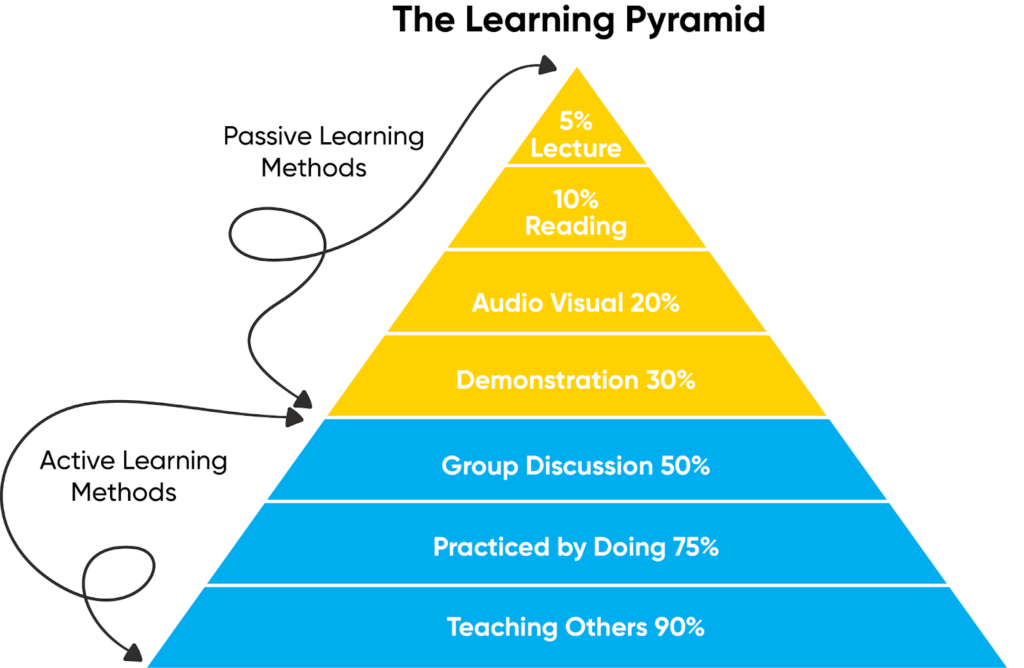
When we talk about the USMLE world and medical diploma revalidation in the U.S., it gets even more intense. You need to study an entire universe of topics in English and in a format you’ve probably never used before. Suddenly, people are telling you to use question banks and flashcards to prepare for the first exam (USMLE Step 1), and you think: “Help!”
So first things first: now that you understand what active study methods are, you’ll need to change your learning resources. Less textbook reading, more question solving (that’s the “practice” part of the learning pyramid). Deal?
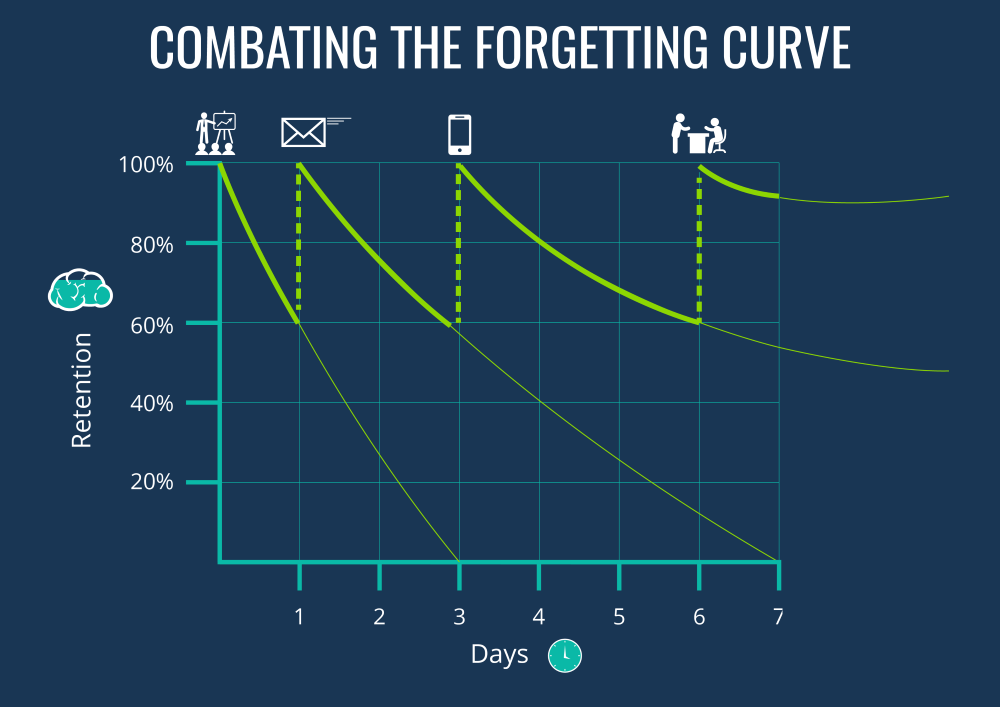
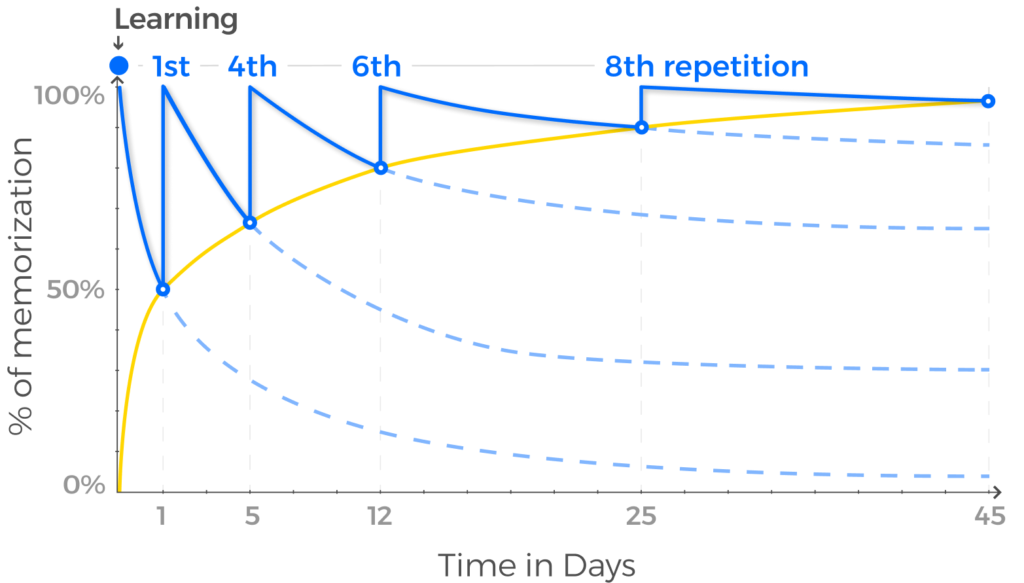
Second step: if you’re studying, I assume you want to retain that knowledge, right? Exactly. We humans have the inconvenient tendency to forget whatever we don’t review. The most effective way to retain knowledge and information in the long term is spaced repetition: reviewing content periodically to consolidate memory. This technique is what allows you to actually remember what you studied (see Ebbinghaus’ forgetting curve below for a visual representation).
So if you want to improve your study performance and truly learn new material, this is the best advice you’ll find: study actively and watch your results follow.
I hope you found this content helpful. If you did, leave a comment (or your question) below!
See you next time!